
Twenty Years of Conservation at Waimea Valley
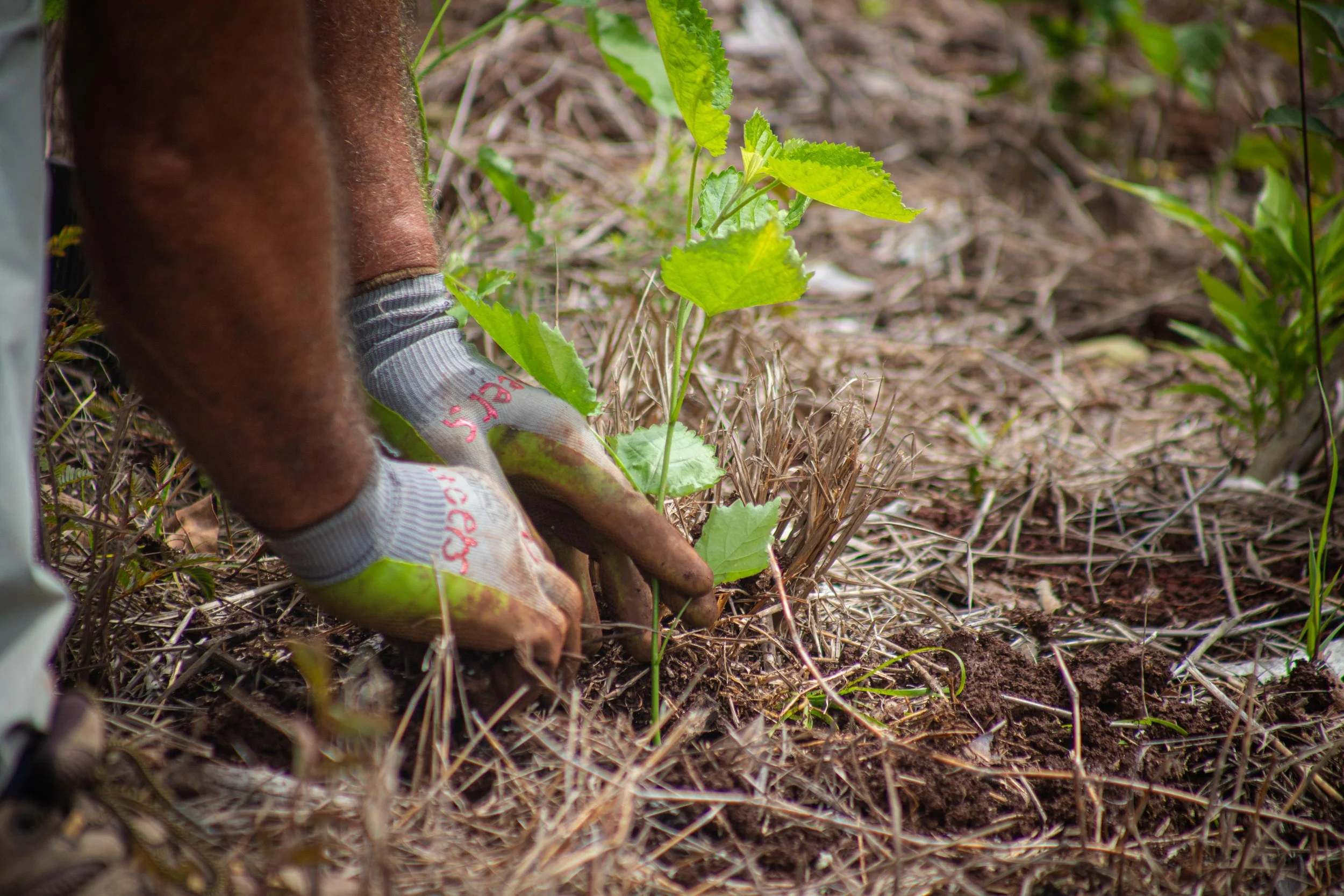
Hānai ʻĀina volunteers planting native Hawaiian plants in the forested ridge above Waimea Valley.
by Parker Powell, Conservation Manager Hi‘ipaka, LLC
In 2026, Waimea Valley marks 20 years since its acquisition by the Office of Hawaiian Affairs and the establishment of its Conservation Department. Beginning in 2006, under the guidance of the Audubon Society, early conservation efforts focused on wetland habitat management to support the resilience of native bird species. In the years that followed, the Conservation Department expanded its scope to address broader ecosystem restoration needs, including forest protection, reforestation, and active land management.
A waterbird survey completed in January 2026 yielded the largest recorded number of ‘alae keʻokeʻo at Waimea, with a total of 13 individuals documented in the estuary. Our ‘Alaeʻula population remains stable at around 15, with 4 new chicks born in Pond One near the middle of March 2025. Conservation staff actively manage the ponds to maintain suitable nesting sites. The birds living in the pond habitat did attempt a nest after the most recent cleaning, and the birds were observed mating.
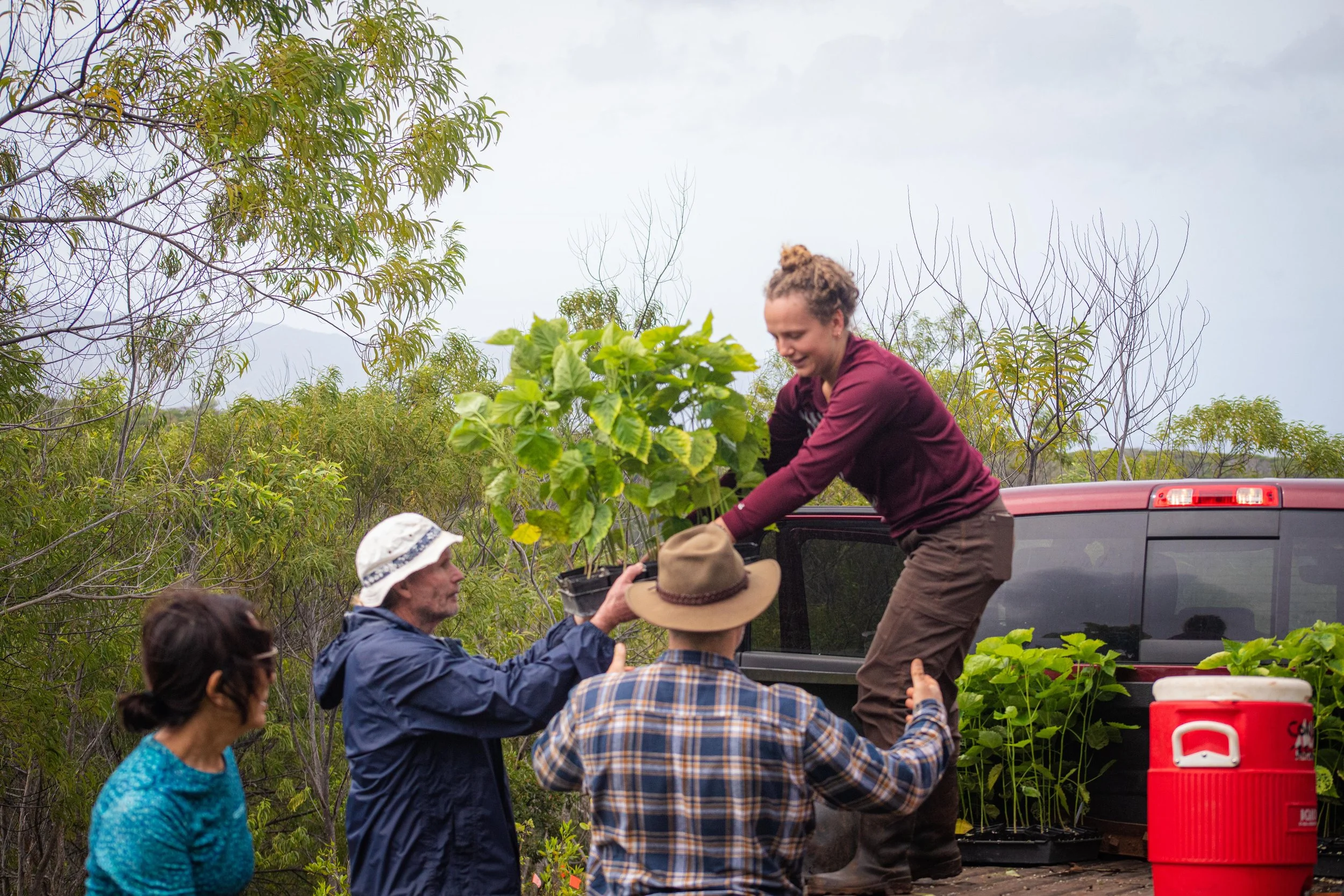
Waimea Valley conservation team distributing native Hawaiian plants to volunteers.
During its early years, Hi‘ipaka, LLC staff conducted extensive monitoring to assess watershed conditions, carried out plant surveys of existing species on the property, and established long-term goals for improving forest ecosystems. The development of a Conservation Action Plan, completed with the support of The Nature Conservancy, set goals and objectives for future environmental and cultural conservation activities in Waimea Valley. One of the first major restoration sites identified was a 16-acre area in the back of the Valley along Drum Road. This special site contains a highly diverse old-growth native forest ecosystem and became known as the Mauka Restoration Site. It was established as the Valley’s first fenced forest management unit.
The installation of fencing in 2013 at the Mauka Site marked a critical milestone. Designed to exclude invasive feral pigs, the fence helps protect the area from disturbance and limits the spread of fast-growing invasive plant species. Native plants, which typically grow more slowly, are especially vulnerable to being overtaken by weeds without such protection. Since 2013, five additional fenced units have been established, bringing the total to six fenced areas, encompassing approximately 120 acres protected from pig activity. Four of these units are located on Kalaheʻe Ridge, where the majority of the reforestation efforts are concentrated.
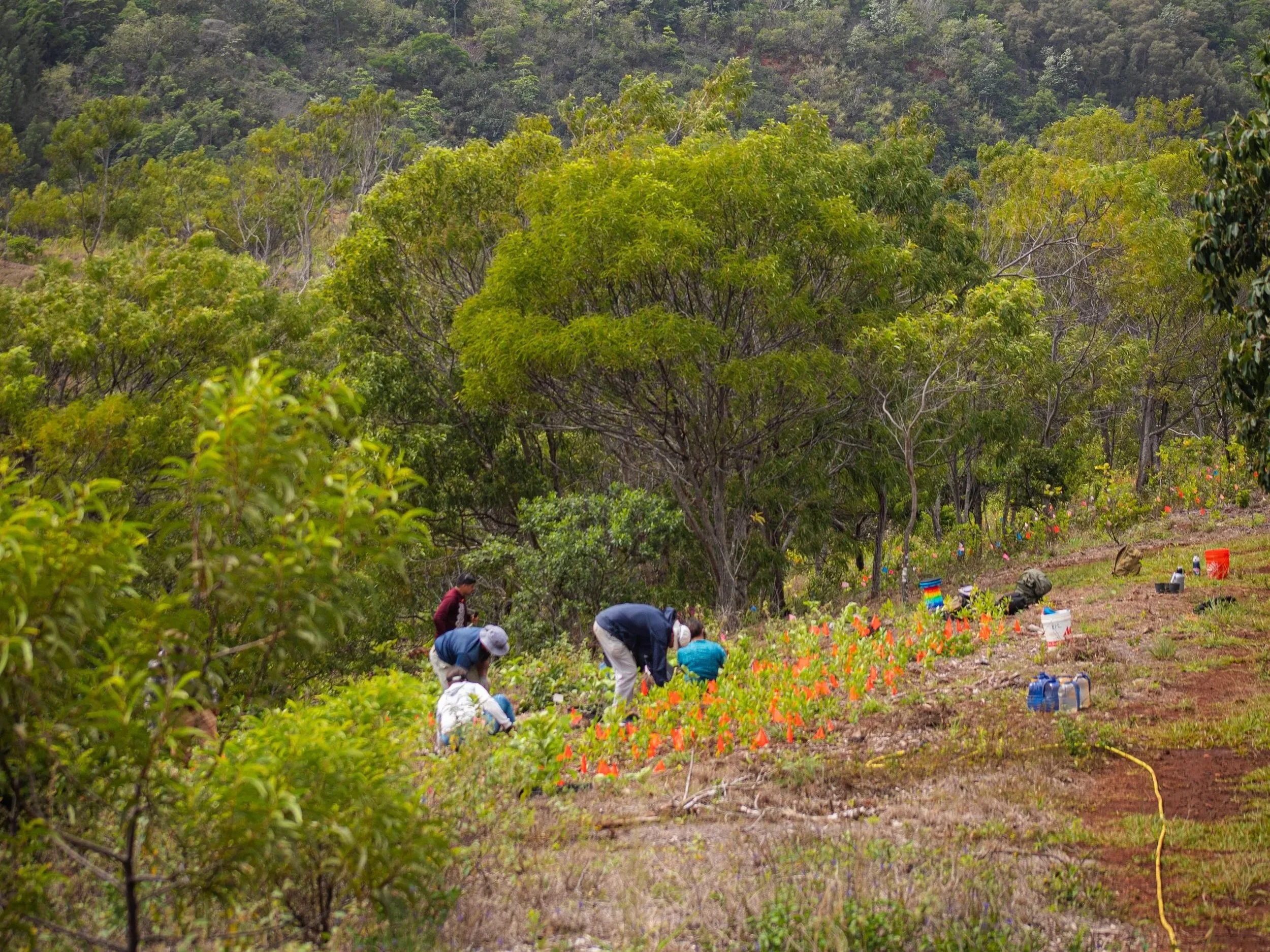
Waimea Valley native tree planting site.
In 2015, Waimea Valley received approval from the State of Hawaii Department of Forestry and Wildlife’s Forest Stewardship Advisory Committee to implement a 10-year management plan under the Forest Stewardship Program. This plan outlined strategic actions to enhance forest health and resilience. Following the successful completion of the first 10-year plan in 2025, which included the installation of fenced units and the establishment of multiple reforestation sites, a new ten-year plan was developed and approved, ensuring the continuation of long-term conservation efforts through 2035.
The new Forest Stewardship Program will focus on active management within these fenced units, with an emphasis on establishing diverse, multi-story native forest ecosystems. Efforts will
also prioritize the recovery and enhancement of vulnerable native species such as ʻiliahi (Santalum freycinetianum), wiliwili (Erythrina sandwicensis), and lama (Diospyros sandwicensis), as well as the critically endangered nioi (Eugenia koolauensis). A carbon offset program was established in 2019 to encourage sponsorship of the conservation plantings with a focus on koa (Acaia koa) tree planting. More information can be found on our website. waimeavalley.net/donate
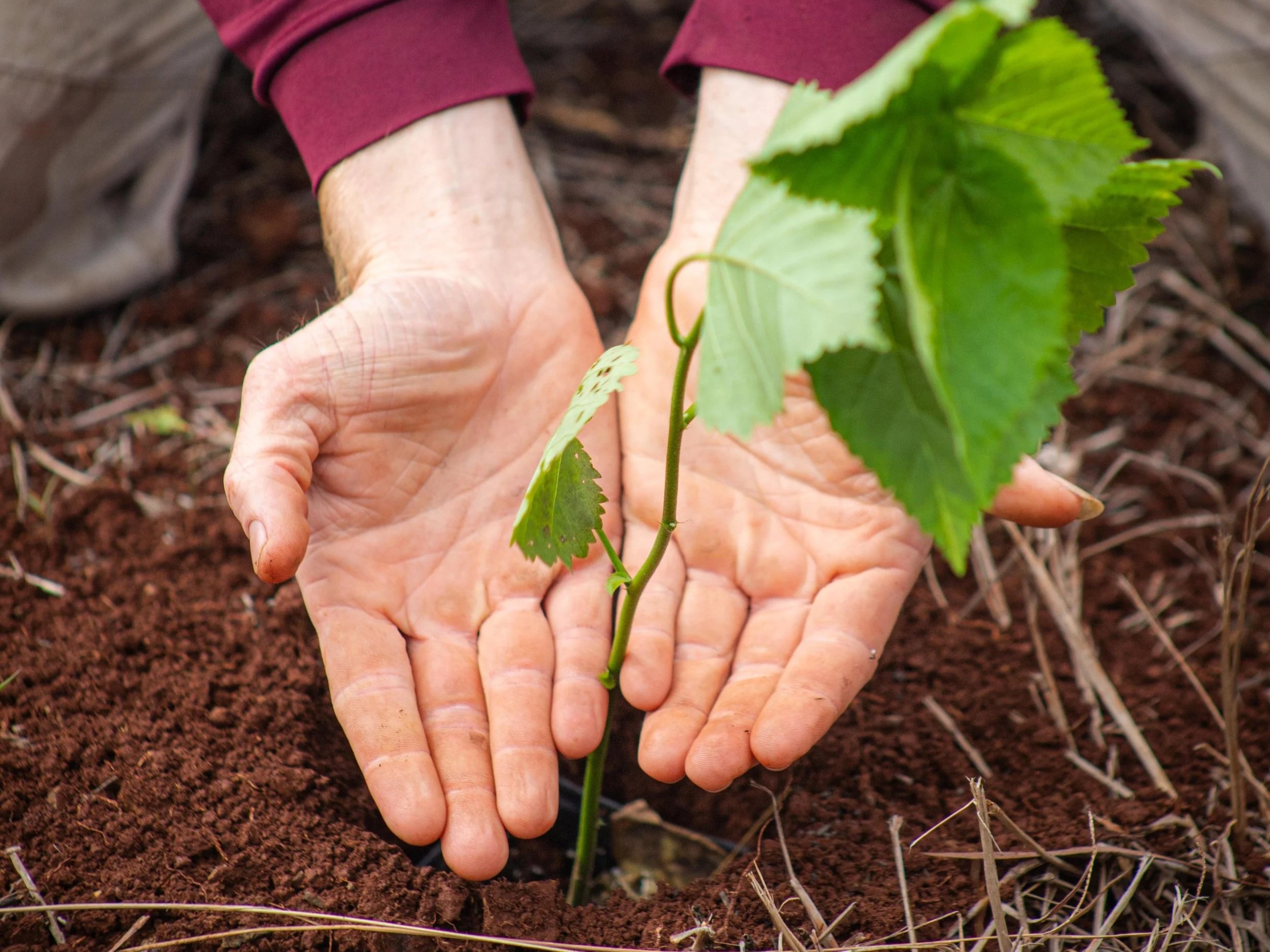
Waimea Valley conservation team demonstrating proper planting techniques.
Since its inception, the program has successfully collected seeds, propagated, and replanted over 100,000 native plants. Much of this work has been made possible through the support of a dedicated volunteer program. Each month, the Conservation Department hosts “Hānai ʻĀina” volunteer workday focused on forest restoration activities that involve hiking to the native tree planting sites. These events typically take place on the third Thursday of each month; with additional Saturday opportunities offered from April through September.
Community members can sign up to participate in Hānai ʻĀina through the Waimea Valley website or by contacting Volunteer Coordinator Malia Evans at volunteers@waimeavalley.net.